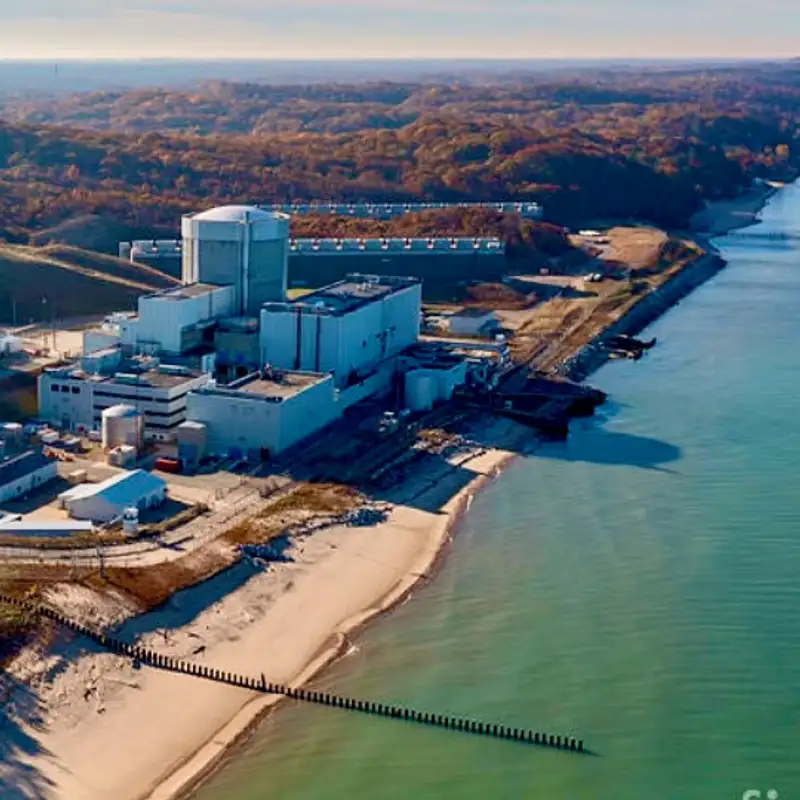
Fresh Start? Zombie Reactor Crisis: Hasty Restart Leads to Preventable, Critical Refueling Accident at Palisades on the Shores of Lake Michigan!
Welcome back to the Nuclear Reactor Next Door podcast. Our guest today is scientist and engineer Alan Bind, who worked at the Palisades Nuclear Reactor for a number of years as design engineering manager. He was also vice president of Nuclear for Consolidated Edison and has worked in the nuclear industry for over forty years. Alan, can you tell our audience a little bit about how you became interested in the restart of Palisades, the first ever attempt to restart an actor that... Reactor that was closed for decommissioning?
Alan Blind:Well, as we discussed in earlier podcasts, you know, I had thought that, you know, Entergy made the correct decision to shut down the plant and enter decommissioning. So, you know, I had a pretty good understanding of what the design of the plant was and its maintenance history and and safety compliance issues. Because I thought it was a good decision to shut it down, I was alarmed by the decision to quickly reverse that from an inexperienced nuclear power operator.
Roger Rapoport:Was there anything in particular that caught your attention when the decision was made to attempt to restart at any particular aspect of the regulation of the plant or any past waivers that influenced the decision of your previous employer energy to close the plant?
Alan Blind:Well, there were many and too many to discuss in this podcast. You know, the plant was at the end of its life in many regards, particularly with the steam generators, but also with other materials. The plant had received exemptions to not comply with safety upgrades based on the promise to shut it down. And so those all kind added up to to one concern to to the overall concern.
Roger Rapoport:Well, you've been to many of the hearings related to the reopening of Palisades, and you've submitted petitions, and you've spoken to the media, of course, including this podcast. Why has it taken Holtec so much longer than they projected to get to the point of fuel loading?
Alan Blind:Well, we don't know the answer to that question because Holtec hasn't shared with us, you know, many of the details of their... Of the restart. You know, they're quick to tell us about their successes, but not very quick to tell us about the problems that they're running into.
Roger Rapoport:Have they received some waivers, like for fire safety and other aspects of the plant restarting that were essential to their... Yes?
Alan Blind:Well, yeah, they... As I mentioned to you, Entergy had received exemptions to not complete a number of important safety upgrades on the promise that they would shut down the plant. And so Holtec just simply asked that those exemptions be renewed, which the NRC did. But what's interesting is though, is the NRC only allowed the exemptions to go for one more operating cycles. So we'll have to wait and see what happens at the end the upcoming operating cycle to see if the NRC renews them again.
Roger Rapoport:So a quick example would be the steam generators. That was one of the pricey items that influenced energy's decision, the replacement of the steam generators. It's a slow process and very expensive, correct?
Alan Blind:Well, the public statements from Entergy was that it was shut down based on operating expenses. It was too expensive to continue operating. They never called out the steam generators specifically, but I'm sure that that was part of it.
Roger Rapoport:And Holtec solution was not to install new steam generators, which would be called for in this situation?
Alan Blind:Well, it's a financial decision, not a safety decision. The the alternative that Holtec did is they they installed sleeves and tubes and two plugs to address the cracked tubes. But they recognize that the tubes are gonna continue cracking And and they'll address that by increasing the number of inspections that they do, you know, doing, you know, increasingly short periods of time to ensure the safety of the public.
Roger Rapoport:And if one of those two cracks ruptures, that could cause a shutdown of the plant. Correct?
Alan Blind:Well, yeah, it would immediately cause a shutdown. But like I say is the... I have confidence in the NRC's acceptance of their plan to operate for reduced periods of time and then shut down and inspect. That will, that's designed to address the tube rupture question. But what it does not address is could there be a small leak short of a tube rupture that would also require them to shut down and retest all the tubes to find that leak.
Roger Rapoport:And that could curtail the operation.
Alan Blind:Oh, yeah. They'd have to shut down for a considerable period of time to do that.
Roger Rapoport:Right. So that might disrupt their entire plan to keep the plant running efficiently.
Alan Blind:Exactly. And that's why I say it's financial consideration more than it is a safety question in my mind.
Roger Rapoport:Right. So to install new steam generators would take some time and quite a bit of money and that that can impede the operation because there's no readily available steam generators that are sitting in warehouses.
Alan Blind:Well, yeah. The point is if they woulda started the replacement when they first announced that they were gonna restart, it would have been done by now.
Roger Rapoport:So tell me a little bit about what's going on now with Palisades. I understand the fuel loading of 200 assemblies, which began on August 30, they had 216 bundled fuel... Each of these assemblies has 216 bundled fuel rods. It didn't go as planned. Is that right?
Alan Blind:Well, that's correct. They... First of all, we have to understand they did not disclose the deviation from the plan. It was actually revealed from a Union of Concerned Scientists person informing the media, and then it gained traction in terms of of what we knew about it. But, yes, they reported that they...
Alan Blind:Ultimately, they reported that while placing a fuel assembly into the reactor core that it tilted and that they would have to request NRC approval to recover that fuel assembly and be able then to resume fuel loading. And now that we've seen their request to the NRC, we know that it it tilted 30 degrees, and it's damaged to some degree. And we can tell that because in their report to the NRC, they say that they have to use a special fuel handling device rather than the normal fuel handling equipment. So we know it's damaged to the extent that the normal fuel handling equipment does not... Will not work.
Alan Blind:And then they also, in their calculation on consequences of an accident, they said that they're not able to discern due to the damage that occurred, you know, from this incident, how many rodlets could be damaged. So they're... What I would call bounding calculation just assume that it would fall over and all of the rodlets would be damaged. So we kind of pieced together the the evidence, but neither the NRC nor the Holtec has said directly.
Roger Rapoport:So what they wanna do is... Because this is a spent fuel assembly, which is highly radioactive, which is part of the reason why all these things normally happen underwater, where normally there's a channel or a tube where the spent fuel assemblies are moved back and forth underwater to the spent fuel pool. But in this case, they're unable to do that. Is that correct?
Alan Blind:That's right. What they're proposing to do in their license amendment request is to put the damaged fuel assembly into a fuel transfer device and then lift that out of the water and and then move it through the containment equipment hatch to the spent fuel pool. Now I understand that's a Holtec certainly, that's their business of designing and building fuel casters. So expect they used that expertise to design this particular canister to do the job, but it's very unusual that they would have to do it that way.
Roger Rapoport:So is there a reason why this normally would happen underwater and why the exception of lifting this containment vessel with the fuel assembly inside it is not normally done? This is unusual.
Alan Blind:Well, design basis of all the nuclear plants in the country are to do these activities underwater to provide protection to the workers and to the public. And so not doing it out of the water, bringing it out of the water is very unique and one time event.
Roger Rapoport:It's a unique event. Okay. Well, let me ask the question this way. You've worked in the nuclear industry for forty years. You worked at Indian Point.
Roger Rapoport:You've worked in Canada. You worked at the DC Cook reactor that's close to Palisades. Has you ever... Have you ever seen this happen before? No.
Roger Rapoport:Okay. And is there a reason why it's never in your industry experience, including being vice president at Con Ed in New York, one of the largest utilities in the country. Is there a reason why you've never seen it before?
Alan Blind:Well, there's a lot of built in procedures and controls and engineering to prevent these kinds of things from happening from the the safety features of the fuel handling equipment, the training of the people that do it, the administrative oversight. It all adds up to many layers of prevention. So the industry, the experienced nuclear operators understand very well how to do this type of work correctly, you know, meaning the normal refueling activities.
Roger Rapoport:So is there a...
Alan Blind:This doesn't happen in the industry.
Roger Rapoport:This just this just doesn't happen. Okay.
Alan Blind:Something, you know, we don't know what happened, but a lot of things had to go wrong, you know, for for this to occur.
Roger Rapoport:Mhmm. So the idea of lifting it out means that there has to be a calculation on what kind of radiation exposure the workers would have. And I think they've done that in their application, the emergency application for the licensing amendment. They've actually done a calculation on what the exposure would be to the workers. And you filed you filed a petition about this to the NRC.
Roger Rapoport:Correct?
Alan Blind:Well, on that element, it was not a petition. It was a letter that I wrote to the NRC. Let me go back and let me frame in how Holt ec designed this license amendment request. First, they asked for emergency processing. And in that, the NRC to to accept an emergency processing, has to view what's the benefit to the public for us to process this immediately.
Alan Blind:And Holtec said, well, it's in the public's interest because it's needed for us to restart the plan, and they didn't go any further than that. Now on the other side of what's in the public interest is that the NRC do a very thorough and thoughtful job of reviewing the proposal and that HOLZEC do a very thoughtful job of preparing to do the work. So the fact that they're inexperienced and they thought that that all could be done in two days just speaks that perhaps they don't understand the significance of this. So second, the way that they... Let's come back to that calculation.
Alan Blind:Yes. They calculated the... What... They kinda answered the... They proposed the question, and this...
Alan Blind:I'll put it in in different phraseology, but it's the same, is what's the worst thing that could happen? And they did a... What's called a bounding calculation. Calculation. And we'll come back and talk about that.
Alan Blind:But they said the worst thing that could happen will have important radiological consequences, but it will all be within the regulatory limits. Mhmm. So what they did is, in effect, they substituted by
Roger Rapoport:So back to the calculation. We're just picking up from that point. Okay?
Alan Blind:So the calculation using the worst case, what's the worst thing that could happen? Calculated the dose to the work... To the control room, the dose to the employees at the site boundary and the public near the site boundary, and they found that those were all acceptable. But my point was legal still means that they're gonna get much higher dose than what the public or the employees would normally get. So I think they're trying to use that as the rationale for why they can go fast and not complete a thoughtful plan and design and review.
Alan Blind:You know, because they've answered the question, what's the worst thing that could go wrong and it's all legal?
Roger Rapoport:Mhmm.
Alan Blind:We'll have to wait and see how the NRC responds to that. Right.
Roger Rapoport:Now normally what would happen is after an event of this kind, there would be a public hearing and public comment?
Alan Blind:Well, the normal license amendment request, yeah, the NRC would allow the public to provide comments and also allow the public to request public hearings.
Roger Rapoport:And why do you think that might not happen in this case?
Alan Blind:Well, that's the process is the... If Holtec has requested emergency processing, and by the nature of emergency processing, those steps are eliminated.
Roger Rapoport:Okay. So what's the hurry for Holtec? Why are they in such a rush? I mean, obviously, the exposure that people could get could be very, very concerning and and both to the the public and to Holtec too.
Alan Blind:Well, let me explain that by talking about what they said in their license amendment request, but also what's in the emergency processes. Holtec, in their own words, to answer answer your question, why, you know, why are they doing this? They said plainly, we think it's in the public interest to start up, and that's their rationale. Now I too have requested emergency processing, but it's not... I've never heard of anybody using the rationale is I wanna start up.
Alan Blind:Typically, in in my own experience, it was we're up and operating and we find a problem, say, you know, we... We're we're working on a pump and we're waiting for the parts to arrive and we need twelve more hours of allowable time to fix the pump. Otherwise, we need to shut down. And so the... Historically, I don't think the NSC ever looked at the economics of shutting down, but shutting down would put additional stresses on the plant in terms of cooling, you know, cooling down, heating up, and changing the pressures.
Alan Blind:So we would say, listen, rather than shutting down, could you just give us twelve more hours? So typically, it's when you're operating and we want an emergency processing so we don't have to shut down. But by definition, when you're shut down, you're in a safe condition.
Roger Rapoport:Mhmm.
Alan Blind:And Holtec, in their in their request, have said that the fuel assembly is in a safe condition. It's been secured. It's being monitored by a camera. So there's no urgency to act with regards to the fuel assembly itself. So the only reason Haltech has given for justifying emergency processing is they wanna start up.
Roger Rapoport:Mhmm. Right. Now could this actually happen today, Alan? I mean, could it be happening right now and we would find out about it after the fact?
Alan Blind:It's possible.
Roger Rapoport:Why... Tell me why the NRC would not open this up to public discussion and just go ahead on its own without any any opportunity for you or any other expert.
Alan Blind:Yeah. That's... You... I can't answer that question.
Roger Rapoport:Right. But it is possible.
Alan Blind:Yeah. Because the NRC perhaps would tell us after the fact that they did it. You know? But perhaps they won't. We'll have to wait and see.
Alan Blind:Ultimately, they will disclose it, and we'll be able to make those determinations after the fact.
Roger Rapoport:But, I mean, they could have already commenced with this process, and we'd find out about it days later. Because the reporting from the NRC has been running days behind the actual correspondence.
Alan Blind:That's correct.
Roger Rapoport:Yeah. Okay. So what could be the outcome if there was a hearing and a review process? What could be the out... Could the...
Roger Rapoport:Was there a way to move the fuel assembly that's been damaged underwater to a safe place and just continue? Could they do that if they wanted to?
Alan Blind:Yeah. I think in the end, it's it's reasonable that this could all be done safely.
Roger Rapoport:Mhmm.
Alan Blind:What's not reasonable is to do it in an emergency time fashion.
Roger Rapoport:Right. So in other words, everything could happen underwater.
Alan Blind:I... I'm not saying... What I'm saying is if you let the normal review process preparations take place, all of the questions will be asked and they will be answered before they they start the
Roger Rapoport:work. Mhmm.
Alan Blind:And we we have... Only thing they've provided us going back is what's the worst thing that could happen? And it's all legal. That's their justification for going fast.
Roger Rapoport:Right. The worst case scenario is all legal. Okay. Now let's talk about what what is legal. So in other words, I think in their calculation, they said that the exposure to workers could be up to 60% of the annual allowable radiation exposure?
Alan Blind:That was through the control room, through the control room operators. That's correct.
Roger Rapoport:Right. That's pretty high, isn't it?
Alan Blind:Well, it's... Yeah. It's it's... I'll say it's unique. Not, you know, high in the fact that it's much higher than what they would normally receive.
Alan Blind:You know, it's nothing that would have a medical impact, it's just... Would it would illustrate, you know, losing control of the evolution.
Roger Rapoport:Mhmm. And what about the fact that radioactive gas could escape from containment in a in a... One of these scenarios?
Alan Blind:Well, that's part of their calculation that it will occur. That... That's the people at the site boundary. You know, that's people like at Palisades Park. They will receive a dose of of radioactive gases at the site boundary.
Roger Rapoport:Mhmm. Right. So is it possible that the calculations underestimate what would happen if there was another drop, like the one that happened on August 30, where where the... Something goes wrong again, and there's a fall of of the assembly or the...
Alan Blind:Yeah. I can't I can't speculate on that question.
Roger Rapoport:Right. So no one knows.
Alan Blind:Well, somebody knows. It's just I cannot speculate because I don't have all the information.
Roger Rapoport:Right. But we do know that on August 30 that this this particular fuel bun... Fuel bundle fuel assembly fell into an abnormal position. Right?
Alan Blind:Well, they didn't use the word fell. They just said when they released the gripper that it tilted. And then like I said earlier, we learned in the details of looking at the license amendment request that it... You know, we inferred that it was damaged in that process because it no longer can be moved using the normal equipment underwater. And that they were unable to determine if any fuel rodlets were damaged.
Alan Blind:So they had to do the bounding dose calculation that I mentioned earlier.
Roger Rapoport:Right. But it hit the the core shroud, which the reactor core shroud. So definitely it fell. You know, it struck the No.
Alan Blind:We can't say that. We don't have enough information to say that.
Roger Rapoport:Well, it was in the Holtec letter.
Alan Blind:They said it's leaning against the shroud.
Roger Rapoport:Yes. Right.
Alan Blind:The shrouds are, you know, vertical orientation.
Roger Rapoport:So Right.
Alan Blind:It just... Gravity would not allow that to occur.
Roger Rapoport:So the whole thing......
Alan Blind:The word fell. It it could be leaning against it, but it would not have fallen into it.
Roger Rapoport:Is it possible that something happened to the shroud while it's leaning against it?
Alan Blind:Roger, off the record, you don't ask me speculation questions.
Roger Rapoport:Right. So we don't... The answer is we don't know.
Alan Blind:We don't have information to answer that question.
Roger Rapoport:Right. Okay. Is the lack of information an issue for you in terms of being able to determine what's actually happening?
Alan Blind:Yeah. I think it's it's in my experience, it's always best to keep the public informed of these issues. Otherwise, you know, the public will actually speculate to fill in the gaps and rather than using the actual data that that you could have released.
Roger Rapoport:Mhmm. So there's a lot we don't know, and that's the purpose of your petition to the NRC. Is that right?
Alan Blind:That's right. You know, petition was to... Really is not about the recovery process. It's about what led up to the failure to position the fuel correctly. And it focuses in on three areas.
Alan Blind:One is what failed with the new fuel handling equipment? What was the failure? Because there's, like I said, there's a lot of design features to prevent that from happening. And second, since it was a... They touted that this was a new and modern machine that they installed.
Alan Blind:Was the design of that machine correct? And then third, NRC had granted Holtec an exemption to allow them to work their operators, specifically on handling fuel, at increased working hours. And so did any... Was there any fatigue of those workers that contributed to this event? So my petition was is that they stop work until...
Alan Blind:Or stop refueling activities until those questions are understood.
Roger Rapoport:Mhmm. And have you heard back from the NRC?
Alan Blind:Well, they they they sent me a receipt for the for the petition, but that's all I have so far.
Roger Rapoport:Do you think that Holtec, in its current proposal for the emergency relief license amendment, once... Assuming there is a hearing and public review and so forth, do you expect that at some point fueling will resume? And do you think there'll be any changes in the way the work rules, for example, the hours and some of the other factors you've talked about, the equipment, do you think that'll be subject to review beyond the current system? Will any outside consultants and people who have more experience potentially be available or or brought into the picture? Is that a...
Roger Rapoport:Is that something the NRC ever does?
Alan Blind:Well, you packed a lot into that question, Roger. Like I said before, they can ultimately be successful. And and this could be, you know, well done, but not on an emergency basis.
Roger Rapoport:On a
Alan Blind:basis where they think through all of the issues, the calculations, and the preparations for for doing it safely the first time. Mhmm.
Roger Rapoport:Do you think they might need some help from people who have a little more experience?
Alan Blind:That would require me to speculate, Roger. Yeah.
Roger Rapoport:It's hard to say. It's hard to say. Okay. So what do you think the next step is in terms of public input from the people who are directly affected by this? Obviously, the the worker community and the people who live next door in in the evacuation area.
Roger Rapoport:Do you have any suggestions? I mean, at this point, it's just kind of wait and see. Could they support your petition if they wanted to?
Alan Blind:No. There's no way... Legal way for them to do that. Again, the emergency processing request shuts down all of the public avenues for participation. So, yes, it's all legal.
Alan Blind:And until the NRC rules on whether they're gonna do this on an emergency basis, the answer to your question, there are no avenues for public participation. Mhmm.
Roger Rapoport:Okay. So the public is not involved?
Alan Blind:Involved.
Roger Rapoport:Not allowed to be involved. Okay. So as far as you know, this is not the normal way that emergency petitions are used. It's like the situation you just described, where they need a they need a a waiver, an amendment, or or temporary amendment so that they can fix something to keep the plant going instead of having to shut the whole thing down.
Alan Blind:Yeah. It's the nature of the process because it needs to move so quickly. There's no time or opportunity for public participation. That's why the NRC has to weigh the public benefit of approving it quickly versus cutting out public and doing a complete analysis. They have to...
Alan Blind:They legally have to do that analysis, weigh those two one against the other.
Roger Rapoport:So whether the the operator's priority of getting the plant running is more important than the potential risks to the employees and the public. Right?
Alan Blind:That's correct. And Mhmm. You know, if Holtec had said, hey. We need emergency processing because we're concerned the fuel assembly could fall over and break. Well, that would have been, in my mind, a legitimate reason, hopefully, because that demonstrates it's in the public interest to not have it fall over and break.
Alan Blind:Mhmm. But Holtec themselves said that's not gonna happen. Mhmm. That's not the basis for their request.
Roger Rapoport:Right. Right. So I have a question. I remember in reading over this application, there was some reference to the fact that the power that this plant was potentially gonna generate was needed because of the boom in AI data centers, data center construction. But at the moment, I just listened to the debate between the two gubernatorial candidates last night.
Roger Rapoport:And they both said that they wanted a moratorium on data center construction in Michigan. So the urgency does not seem to be quite as urgent as Soltech put it in their application.
Alan Blind:Well, that's a... Yeah. I mean, there's a a connection, a straight line connection between nuclear power and data centers. And so we all can watch the evening news. We know that both parties are against building more nuclear...
Alan Blind:Or data centers now. So that straight line need for more power, it seems like it would also be gone. But I'll leave that to the political Right. Questions to analyze that question.
Roger Rapoport:But that was one of the rationales for the emergency that there's this emergency need for all this power for the data centers.
Alan Blind:Well, yeah. That's right.
Roger Rapoport:Right. So that argument is a is a tough one to make when when there's a... The new... Either the new governors, whoever wins, is gonna basically call for moratorium. That argument doesn't quite hold up is what what I'm asking.
Alan Blind:Yeah. I'm just not sure how the NRC... How how involved they get in those
Roger Rapoport:Right. Okay.
Alan Blind:They do... They get into those political questions. And I don't think they they do that so much. So
Roger Rapoport:Well, if
Alan Blind:and I can you and I can connect those dots. I'm just not sure the NRC is doing so.
Roger Rapoport:But, I mean, Holtec brought it up in their application that the data center the the need for data centers is one of the rationales for this emergency decision. That was part of their argument.
Alan Blind:Okay. I mean, if you
Roger Rapoport:Go ahead.
Alan Blind:No. I'm just saying, yeah, you know, ask a question.
Roger Rapoport:Well, was that was that in the application? Did they mention the data center?
Alan Blind:I don't recall data centers being in the application. What... What's clearly in the application is they said it... The public interest is served by us restarting the
Roger Rapoport:plan. Mhmm.
Alan Blind:And, you know, when you look at the the media statements from the politicians when they were all supporting the Restart, it was the politicians who made the connection, to data centers.
Roger Rapoport:Mhmm. Right. Got it. Okay. So as far as this actual activity, the one where they're proposing the transfer out in in the...
Roger Rapoport:Lifting it above the pool, do you feel that the plan, as you've read it, is one that needs further study that doing it on an emergency basis might not be a great idea?
Alan Blind:Well, you asked two questions. First question is could could it in the end be done safely? And the answer to that remains yes. And the second question is, the way they're going about it is that, do I agree with it? And I said no, because they're trying to do it too fast and not thinking through all of the planning and contingencies.
Roger Rapoport:Mhmm. Which is related to what happened on August 30 when that...
Alan Blind:I don't cause for speculation.
Roger Rapoport:Right. But... Well, on August 30, we saw what happened. So it's possible something else. I'm just raising the possibility that maybe there were...
Roger Rapoport:They could have done a little more planning on on the original loading too. The same the same question. You know, not moving too fast and taking through all the planning. Not doing not doing overtime, for example. You know?
Alan Blind:We we know something led up to the tilting of the fuel. And we know that that was highly unusual and that there had to be multiple failures for it to occur. So you're correct that a reasonable person would say, well, if you're going fast on this activity, what's to say that the same type of issues would not just happen again? So that's a reasonable a reasonable person would ask that question.
Roger Rapoport:And that, in fact, gets back to your petition. We wanna know what happened on August 30 just to learn from that experience. Right?
Alan Blind:We want the NRC to know what happened, and we want the NRC to evaluate that the corrective actions have been taken. It will not happen again. Mhmm. So once they get to that point, then it's it's fine to proceed forward.
Roger Rapoport:Mhmm. Okay. Well, thanks, Alan. This has been really really great conversation, and and we look forward to having you back on the Nuclear Reactor Podcast next door again. And, we'll keep track of the petition and how the NRC responds and what the next steps are.
Alan Blind:Okay, thank you Roger.
Roger Rapoport:Thank you very much.
Creators and Guests